
SERP insights · Sybel Micro Solutions
How Manufacturing ERP Connects BOMs, Work Orders, Inventory and Quality
Manufacturing ERP connects product definitions with material availability, production activity and inspection evidence. Explore the records behind that workflow.
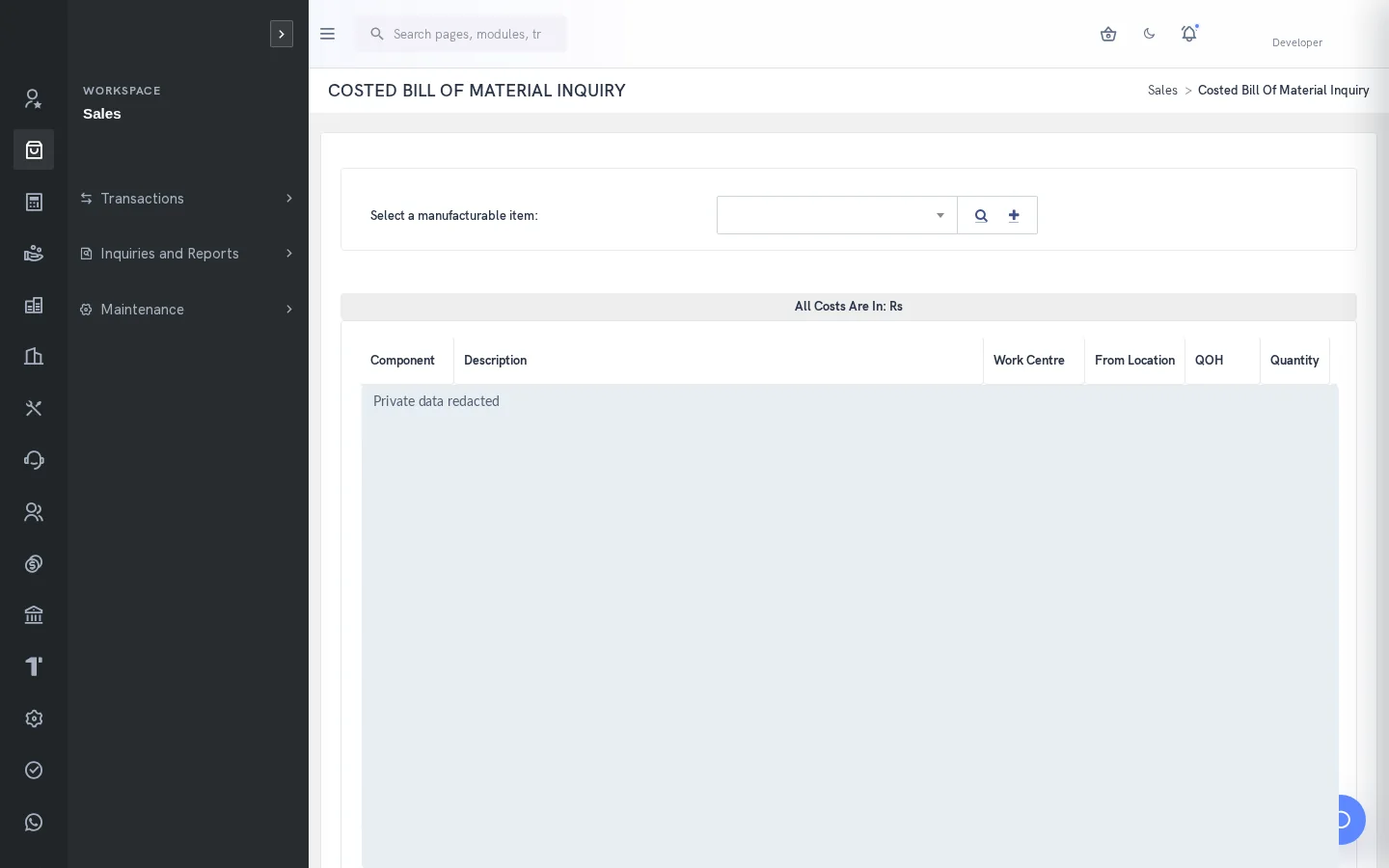
Start with the product definition
A bill of material describes the components required for a manufactured or kit item. It is a shared reference for planning and execution, but it still needs engineering review. Units, quantities, locations and work centres matter. A plausible-looking product structure can be unsuitable if those details are wrong.
Move from definition to work requirement
A work order records the intended production requirement and its context. Item, quantity, branch, destination and dates help users understand what needs to be made. Sales-order linkage can relate that requirement to customer demand where appropriate. Creating the order does not establish that components have been issued or finished goods produced.
Read the material position carefully
On-hand stock, availability, demand and open requirements answer different questions. Review the intended location and date before interpreting a component shortage. A company-wide total may not explain the stock available to the relevant production operation. Inventory inquiries provide the supporting context for that discussion.
Keep execution events distinct
Release, material issue, job activity and output recording describe different stages of work. The procedure depends on the work-order type. Preserving separate records helps explain whether an open requirement is waiting for release, materials, activity or final output. It also gives stores and production a common reference for consumption.
Connect quality evidence to the stage
Incoming raw material, in-process checks and outgoing finished goods need different inspection context. An observation should identify the relevant material or production event and the responsible follow-up. Closing an observation differs from approving a deviation. Quality management is more useful when those distinctions are retained.
Review output and cost before closure
Compare the manufactured quantity with the requirement and investigate any difference. Costing and accounting trace provide a financial view of production activity. Review that evidence alongside operational records instead of interpreting closure as a way to hide unresolved work. Processed and closed orders can impose constraints on later changes.
Use AI proposals with engineering responsibility
SERP AI BOM proposals compare descriptions with existing BOM patterns and suggest components. Engineers must check suitability, units, quantities, locations and work centres. Approval adds eligible components to the target BOM; it is a change to production master data. A confidence score reflects matching behavior, not a guarantee that the design is correct.
Put the sequence into practice
For a representative item, review the BOM, establish the work-order requirement and inspect component availability. Follow the applicable issue and job activity, record output, review quality evidence and investigate costing before closure. SERP by Sybel Micro Solutions documents these connections in its manufacturing capabilities and process guide.
Questions for the implementation team
Ask how a shortage, held sales-order item, quality observation and partial production result should be handled. Identify the person responsible for each decision and the inquiry that confirms its outcome. Demonstrate the actual enabled configuration rather than assuming a single production sequence applies to every business or work-order type.
Investigate the production exception
A material shortage, held sales-order line and closed work order are different conditions. Begin with the specific requirement and its reference. Review the BOM, location stock and order state before deciding whether procurement, planning or an authorized correction is needed.
Record what has actually occurred: release is not issue, and issue is not finished output. Cost review should relate those events to the quantities and account context rather than treat every open order as the same problem.
Where does quality fit?
Incoming, in-process and outgoing inspections retain the relevant stage and criteria. Follow observations to closure using the quality workflow and keep deviation approval separate. A color or dashboard status does not itself establish acceptance or permission to proceed.
A few useful answers
Frequently asked questions
What should readers verify in practice?
A material shortage, held sales-order line and closed work order are different conditions. Begin with the specific requirement and its reference. Review the BOM, location stock and order state before deciding whether procurement, planning or an authorized correction is needed.
Does a feature label establish availability?
No. Confirm enabled functions, the intended workflow and the permissions for the target company.
Where should we start learning about ERP concepts?
Read the ERP guide and use the related modules to connect definitions with actual workflows.
See how your business connects with SERP.
Bring your processes, priorities and questions. Let’s make the demonstration useful for your team.
Request a Demo →